
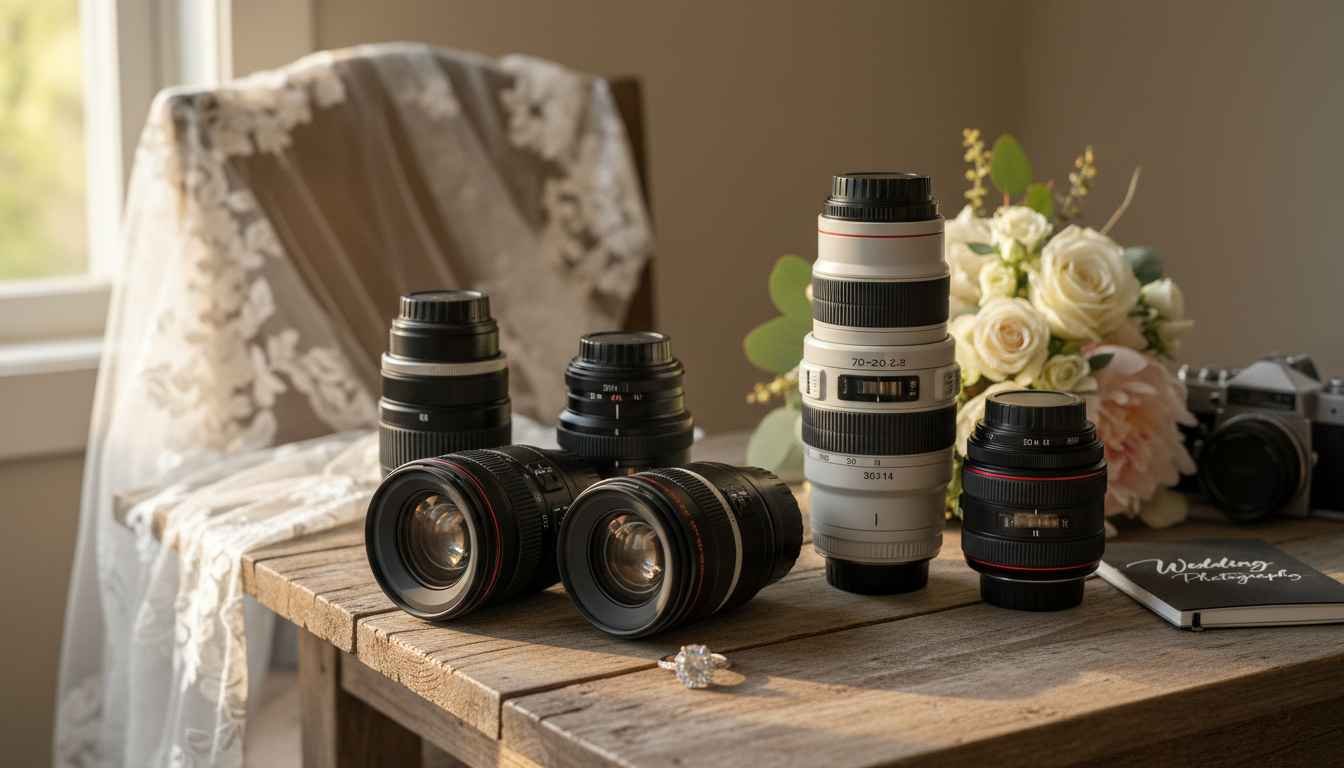
Let’s cut the crap. If you’re showing up to a wedding with a kit lens and expecting magic, you’re in for a harsh reality check. Wedding photography isn’t about luck – it’s about having the right tools to capture moments that vanish in an instant. Your lens is not just glass; it’s your storytelling companion. Knowing which lenses perform under pressure is what separates average shooters from professionals who get hired year after year.
Wedding photography is chaotic, unpredictable, and emotionally charged. You need lenses that handle low light without becoming noisy, lenses that offer creamy bokeh to isolate your subjects, and optics that capture both intimate details and sweeping scenes. Let’s break down the essential lenses you need to dominate your next wedding.
Prime Lenses for Sharp Portraits and Detail
Prime lenses, with their fixed focal lengths, force you to think creatively while delivering unmatched image quality. A 35mm f/1.4 or f/1.8 is ideal for environmental portraits, allowing you to include the bride and groom in context with their venue without distortion. For tighter, more intimate shots, a 50mm f/1.2 or f/1.4 brings out facial expressions and candid moments with buttery bokeh that separates subjects from distracting backgrounds.
High-end primes like the 85mm f/1.4 are invaluable for close-ups and ceremony shots. They compress space beautifully, creating that cinematic wedding look everyone desires. The drawback? These lenses require you to move around to frame shots, which can be tricky during tight, crowded ceremonies.
Zoom Lenses for Flexibility and Speed
If priming your way through a wedding sounds exhausting, zoom lenses offer flexibility. The 24-70mm f/2.8 is the workhorse for professional wedding shooters. Wide enough for group photos, yet tight enough for emotional close-ups, this lens balances versatility with speed. When paired with a full-frame sensor, you get a professional edge without constantly swapping lenses mid-event.
Another critical zoom is the 70-200mm f/2.8. This telephoto lens lets you capture candid moments from a distance without disrupting the scene. Perfect for ceremony shots, speeches, and first dances, it keeps you unobtrusive while giving your images a polished depth. The downside is the weight – these lenses are heavy, and handheld shooting all day can be exhausting.
Specialty Lenses That Make a Difference
Macro lenses are often overlooked but can elevate your wedding portfolio by capturing intricate details. Think rings, bouquets, invitations, and table settings. A 100mm f/2.8 macro provides clarity and compression, making small elements pop without overwhelming your composition.
For dramatic wide shots, consider an ultra-wide lens like the 16-35mm f/2.8. Ideal for grand venues, sweeping architecture, or dance floor chaos, these lenses can handle wide-angle storytelling without distortion when used correctly. Caution is required – getting too close can exaggerate proportions and distort faces, so practice framing.
Low-Light Performance Matters
Weddings often extend into dimly lit receptions. Fast lenses – those with wide apertures like f/1.2 to f/2.8 – are crucial for sharp, noise-free images without relying heavily on flash. Full-frame cameras combined with these lenses can maintain quality at higher ISOs, which is critical when ambient light is all you’ve got.
Remember, not all fast lenses are created equal. Some can produce softer edges or flare in challenging lighting. Testing your lenses in similar lighting conditions prior to a wedding ensures you won’t be caught off-guard.
Who Should Avoid Certain Lenses
Not every photographer benefits from splurging on every high-end lens. Beginners might find heavy zooms like the 70-200mm cumbersome and hard to handle without a monopod. Ultra-wide lenses can frustrate those unaccustomed to spatial distortion, creating more post-processing work than desired. Additionally, budget-conscious shooters may find prime lenses intimidating due to limited flexibility – they require precise positioning and careful framing. For some, renting high-end lenses for weddings rather than purchasing outright is a more strategic approach.
Conclusion
Choosing the right lenses for wedding photography is more than gear obsession – it’s about preparing for every scenario, maximizing image quality, and telling a couple’s story without missing a beat. Prime lenses deliver sharpness and artistic depth, zooms give you flexibility, and specialty lenses let you highlight the smallest details. Each choice comes with trade-offs, so understanding your style, workflow, and physical stamina is just as important as knowing specs.
Every wedding is different, and having a versatile lens kit tailored to your shooting style ensures you can capture both sweeping narratives and intimate moments. For photographers in Greensboro, NC, who want to see these lenses in action in real-world wedding shoots, Kelly McPhail Photography offers a prime example of how the right gear amplifies storytelling while maintaining an authentic, emotional connection with the subjects.
Summary: Good lenses for wedding photography are essential for capturing high-quality, emotional, and dynamic images. Prime lenses offer sharpness and bokeh, zooms deliver versatility, and specialty lenses highlight details. Fast apertures handle low-light scenarios effectively, but heavy or ultra-wide lenses require experience. Understanding the trade-offs and your shooting style ensures you capture weddings professionally and creatively.
Just as the right lens can elevate wedding photography, exploring new destinations can inspire creativity in your craft; for instance, photographers can discover the magic of great places to visit in Paris, France, where stunning architecture and vibrant street life provide endless opportunities for breathtaking shots.
