
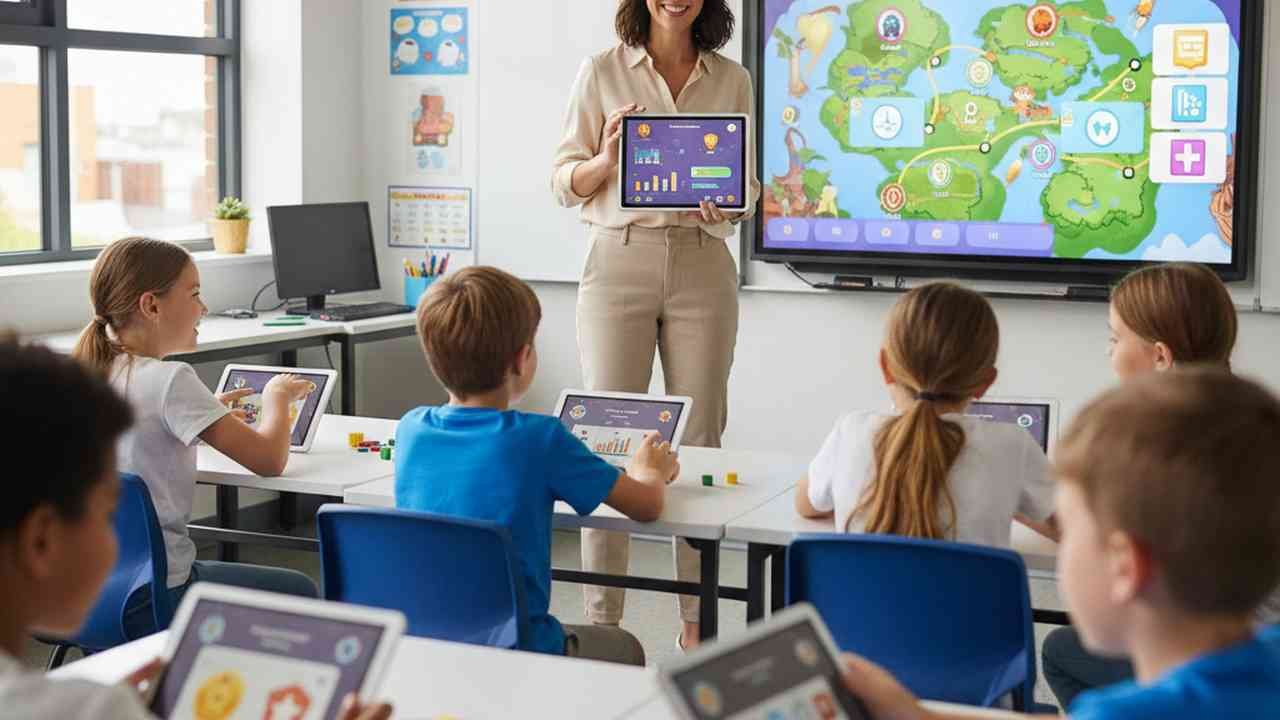
The Magic of Gamification in Education
In today’s fast-paced, tech-driven world, students are immersed in a whirlwind of digital entertainment, from video games to social media platforms. Imagine bringing that same excitement and interactivity into the classroom. This is where gamification comes in, a game-changing tool that taps into students’ natural love for competition and achievement. By integrating game elements such as points, levels, badges, and rewards into educational settings, teachers can transform a dull classroom into a thrilling challenge zone. Students don’t just *learn*; they *play* their way to knowledge, feeling energized, engaged, and, most importantly, motivated.
But gamification is not just about adding a few fun elements. It’s about creating an immersive, dynamic learning environment that adapts to the needs and interests of students. Gamification goes hand in hand with cosmic education, where learning is seen as an expansive journey. By gamifying lessons, educators provide students with an interactive, hands-on approach to mastering complex subjects, making each lesson feel like an adventure worth embarking on. The beauty of this system lies in its ability to keep students constantly involved and striving for their next achievement. In a world where motivation can wane, gamification is a lifeline to keep students focused and on track.
Why Gamification Matters for Student Motivation
At the core of every student’s learning journey lies the question: Why should I care? Traditional methods of teaching, while important, often fail to ignite a deep sense of curiosity. Gamification, however, taps into something deeply human: the desire for challenge, achievement, and recognition. Think about it – when students earn points, level up, and receive digital rewards, they aren’t just completing tasks; they are engaged in a battle of skills, intellect, and perseverance. This isn’t just play; it’s a quest for excellence, a race toward mastering the material, and a journey that *only* the best can win.
Teachers can infuse cosmic education into this process by framing each subject or topic as part of a larger, interconnected world of knowledge. For example, a history lesson could be portrayed as a mission to discover the lost treasure of ancient civilizations, with students embarking on challenges that allow them to “unlock” historical artifacts. As they advance through the material, they receive rewards and achieve higher levels, all while being motivated to dive deeper into the subject matter. The key here is creating a compelling, competitive environment that drives students forward, providing both intrinsic and extrinsic motivation to succeed.
Tracking Progress Through Gamification
One of the most powerful aspects of gamification is its ability to track and visualize students’ progress. Traditional methods of assessment, such as exams and quizzes, often focus on measuring knowledge in a static way. Gamification, however, allows for real-time progress tracking, offering a dynamic and ongoing view of a student’s growth. With tools like leaderboards, progress bars, and badges, both teachers and students can see exactly where they stand in their learning journey. This visual tracking is not only motivating – it’s also incredibly effective in highlighting areas for improvement.
By aligning gamification with cosmic education principles, educators can track students’ progress in a holistic way. Rather than focusing on individual assignments, educators can assess how well students are engaging with the material over time. For example, a student who consistently levels up in the classroom may not just be good at completing individual tasks – they may be demonstrating a deeper understanding of the interconnectedness of the subjects they’re studying. Gamified systems offer teachers invaluable data that can be used to adjust teaching methods, reinforce key concepts, and provide targeted support for students who need it most. The ability to track progress seamlessly allows for tailored learning experiences that are both relevant and timely.
Creating Competitive yet Collaborative Environments
Competition is a major motivator, but collaboration is equally essential in the modern classroom. Gamification isn’t just about individual success – it’s about fostering a sense of community, teamwork, and shared achievement. When students participate in challenges and missions together, they learn how to work as a unit, strategizing and problem-solving as a team. The game may have individual levels and points, but the ultimate goal is collective success. Whether it’s a group project, a classroom-wide scavenger hunt, or a team-based quiz, gamification encourages students to support each other while competing for individual rewards.
This approach aligns perfectly with the principles of cosmic education, where the focus is on the whole child and the importance of social and emotional development. As students collaborate and learn together, they build important interpersonal skills, like communication, empathy, and conflict resolution. Gamified group activities not only make the learning experience more enjoyable – they also prepare students for real-world situations where teamwork is key to success. By using gamification to foster collaboration, teachers ensure that students experience a balanced blend of competition and camaraderie, which is essential in the development of well-rounded individuals.
Using Technology to Enhance Gamification
Incorporating technology into gamification opens up a world of possibilities for both teachers and students. Digital platforms and apps that integrate gamified learning experiences allow for seamless tracking, real-time feedback, and personalized learning paths. Platforms like Kahoot!, Classcraft, and Duolingo have revolutionized the way gamification can be applied in classrooms, offering customizable features and real-time analytics that make gamified learning easier than ever.
For teachers committed to cosmic education, technology can help bring abstract concepts to life. Imagine a science lesson where students interact with a 3D simulation of the solar system, earning points and unlocking new features as they progress through the material. Or perhaps a math challenge where students solve complex problems to unlock clues that help them crack a code. The possibilities are endless, and the technology that supports gamification is continuously evolving. The integration of technology ensures that learning is not only engaging but also efficient, with instant feedback and progress tracking that allow students to see their advancement and stay motivated.
How Gamification Builds a Growth Mindset
One of the most transformative effects of gamification is its ability to foster a growth mindset among students. Rather than seeing failure as something to be avoided, gamification teaches students to view challenges and setbacks as opportunities for growth. Just like in video games, where players often need multiple attempts to level up, gamified classrooms encourage students to keep trying, learning from their mistakes, and improving over time. Badges, rewards, and new levels serve as constant reminders that success is not about perfection but persistence.
This growth mindset is crucial to the principles of cosmic education, which emphasizes continuous learning and the importance of resilience. Students are encouraged to stretch beyond their comfort zones and take on challenges that might seem daunting at first. In doing so, they develop perseverance, problem-solving skills, and the confidence to tackle new obstacles. Gamification, when aligned with cosmic education principles, creates a space where learning is seen as a lifelong adventure, with endless opportunities to grow, evolve, and master new skills.
The Power of Instant Feedback and Motivation
Gamification excels in providing students with instant feedback, a crucial element for motivation and growth. In traditional settings, students often wait days or even weeks to receive feedback on assignments, leaving them disconnected from their learning journey. With gamification, feedback is immediate, allowing students to reflect on their performance and adjust their approach right away. Whether it’s a digital badge, a level-up notification, or a quick leaderboard update, these instant rewards reinforce positive behavior and encourage students to keep pushing forward.
The fast-paced nature of gamified learning mirrors the immediacy of modern life, where instant gratification has become the norm. This immediacy helps students stay connected to their educational experience, making them feel more in control of their learning. For educators implementing cosmic education, this feedback loop also helps reinforce the idea that learning is an ongoing process, not a one-time event. The constant cycle of challenge, feedback, and progression motivates students to stay engaged and focused, even when the material is challenging.
Building Lifelong Skills Through Gamification
Gamification doesn’t just teach academic skills – it equips students with the real-world abilities they need to succeed in life. Problem-solving, critical thinking, time management, teamwork, and adaptability are all key skills that are naturally developed through gamified learning. In a world where adaptability and continuous learning are paramount, these are skills that will stay with students long after they’ve graduated.
Integrating cosmic education into this framework ensures that learning isn’t confined to textbooks and tests. Instead, it encourages students to engage with the world around them, seeing connections between what they learn and how they can apply that knowledge in everyday life. Whether it’s collaborating on a class project, solving complex problems, or navigating through intricate simulations, gamified learning builds the kinds of skills that employers and society value. The result is a student who is not only knowledgeable but equipped with the tools to succeed in any environment.
