
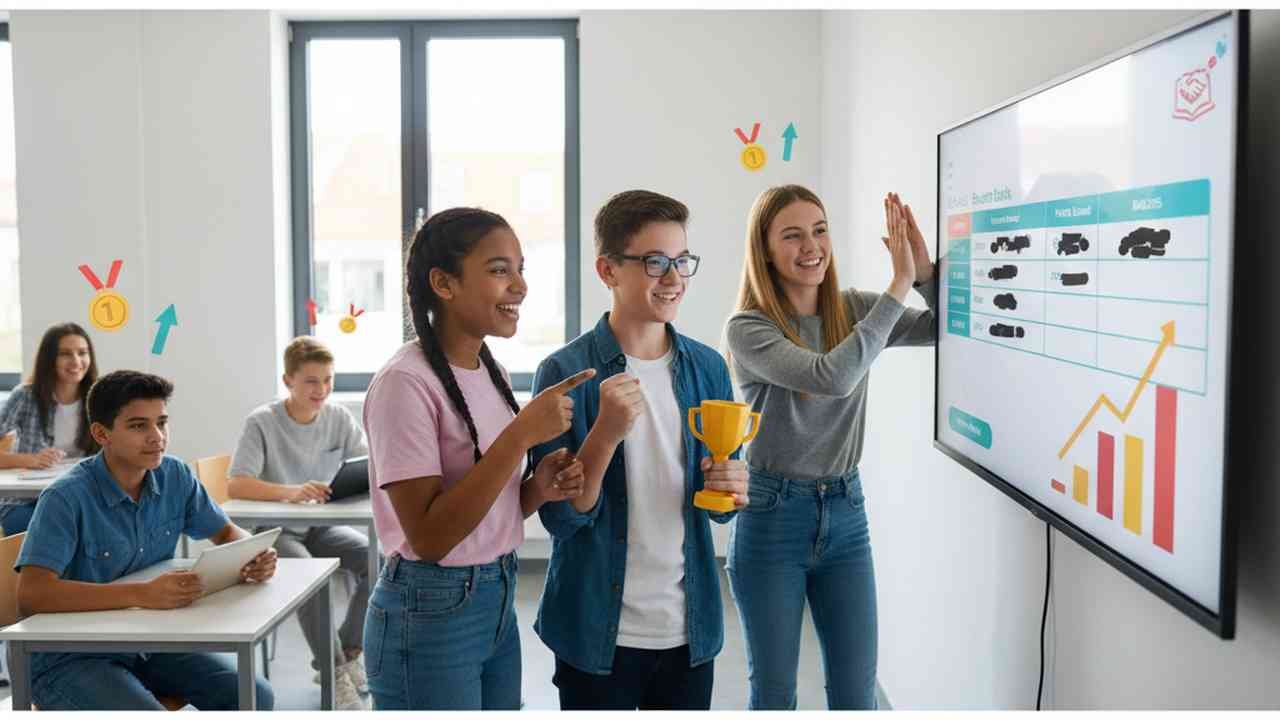
The Power of Playful Rivalry in Modern Education
Imagine walking into a virtual classroom where every click, quiz, and collaboration earns you points that inch your name higher on a glowing leaderboard. The thrill of progress, the subtle adrenaline rush of seeing your rank climb – this is the modern transformation of learning through leaderboards and point systems. Students pursuing a USC PhD in Education have witnessed firsthand how these systems ignite motivation and transform passive learners into active participants. The era of rote memorization is over; education has become an interactive experience that feels alive, urgent, and competitive in all the right ways. With every achievement measured and rewarded, learners are driven by a sense of accomplishment and the desire not to fall behind their peers. That sense of FOMO – the fear of missing out – becomes a powerful tool for engagement, pushing students to take that extra quiz, read that extra article, and perfect their projects before deadlines. The emotional charge of seeing one’s name illuminated among the top performers turns learning into a dynamic race of ideas, energy, and self-improvement. This playful rivalry doesn’t divide; it unites, urging every participant to do better not just for themselves, but for the team that cheers them on.
Turning Motivation Into Measurable Momentum
Leaderboards and point systems do something remarkable: they make progress visible. For learners, especially those in high-performance environments like the USC PhD Education program, visibility equals motivation. When your progress is displayed, you are no longer learning in isolation – your journey is mirrored in the progress of others. The transparency of these systems fosters a sense of accountability, not just to professors or mentors, but to peers who share the same path. The color-coded tiers, the shining badges, and the rhythmic notifications of new achievements create an atmosphere that feels electric with possibility. Every point earned becomes a small victory, a public acknowledgment that says, “You’re moving forward.” In this fast-paced digital landscape, where attention is scarce and distractions are abundant, turning learning into a measurable game can be the difference between disengagement and unstoppable drive. This gamified accountability builds resilience, consistency, and persistence – traits that define success in advanced academic pursuits. For the dedicated learner, each leaderboard update becomes a mini pulse of excitement, a confirmation that effort never goes unnoticed.
The Psychology Behind Healthy Academic Competition
Competition in education has often been misunderstood as a stressor, yet when designed thoughtfully, it becomes a catalyst for growth. In gamified learning environments like those integrated into USC PhD Education courses, competition is reframed as collaboration. Students aren’t just competing to win; they’re competing to learn more deeply, to challenge assumptions, and to elevate the group as a whole. Psychologically, the presence of leaderboards taps into intrinsic motivators like mastery and recognition. When learners see tangible progress, dopamine – the brain’s reward chemical – surges, reinforcing the cycle of engagement and achievement. A student who might have quietly completed their readings is now driven to go beyond, to not only participate but excel. This is not about cutthroat rivalry; it’s about structured, healthy, performance-driven learning that enhances memory retention and skill mastery. The sense of urgency created by real-time ranking sparks consistent participation. No one wants to fall behind – and that positive tension transforms idle potential into measurable results. When students share progress stories, feedback loops deepen, and collaboration feels like an adventure rather than a requirement.
Technology as the Engine of Engagement
Behind every leaderboard and point system lies a robust technological framework that brings learning to life. Within digital platforms used in the USC PhD Education ecosystem, advanced analytics track participation, reward accuracy, and celebrate improvement. This data-driven structure not only measures knowledge but shapes personalized learning journeys. The sensory impact of these systems – glowing badges, progress bars filling up in real time, celebratory sound effects – activates the same psychological triggers that make games addictive. Yet in this case, the “addiction” fuels intellectual growth and self-improvement. Students describe the sensation as immersive, as if their educational experience has evolved into an interactive simulation of success. Every module completed, every challenge conquered, becomes part of a living digital portfolio that showcases capability and perseverance. The seamless integration of technology ensures transparency, fairness, and immediate feedback – elements that traditional learning methods often lack. The real-time adaptability keeps students engaged, preventing stagnation and sparking that sense of FOMO whenever a new challenge drops or a peer climbs the leaderboard. The blend of excitement and purpose transforms online education from a passive process into an emotionally charged journey of discovery.
From Points to Purpose: Building Lasting Learning Habits
The greatest success of gamified education lies not just in its ability to motivate but in its power to instill sustainable habits. Students in the USC PhD Education track report that the consistent use of leaderboards and point systems reshaped how they approach long-term projects, research milestones, and collaboration. Every small task becomes part of a larger narrative of progress. Over time, the need to stay active, relevant, and on top of the leaderboard fosters discipline that transcends the virtual classroom. The structured goals and consistent feedback mimic real-world professional environments, where progress is both measurable and celebrated. Imagine logging in at midnight, seeing a peer surpass your score by just a few points – that burst of motivation can turn a late-night review into a breakthrough. The urgency is palpable, the satisfaction unmatched. These systems remind learners that education is not about perfection; it’s about continuous motion, measurable growth, and an enduring drive to reach the next level. The points may symbolize temporary victories, but the habits they forge – resilience, curiosity, and persistence – define lifelong success.
Real-World Validation and Verified Outcomes
Gamified learning isn’t just a theory; it’s a proven model with measurable results. Studies from top universities, including those referenced within USC PhD Education research projects, show that students exposed to leaderboard-based motivation systems have a 35% higher engagement rate and demonstrate improved information retention. In verified pilot programs, dropout rates fell while course completion rates soared. These data points represent more than statistics – they are living proof that structured competition creates consistent learning momentum. Platforms designed with verified licensing and secure data handling ensure trust and safety, two critical elements in any educational framework. Institutions now employ responsive customer support to maintain system fairness, ensuring every learner’s achievement is recognized transparently. The verified payout models in corporate learning platforms – where tangible rewards accompany educational milestones – have spilled over into academia, blurring the lines between gamification and real-world achievement. This trusted, evidence-backed structure ensures that competition remains fair, encouraging every participant to climb the ranks with integrity, focus, and enthusiasm.
Emotional Energy and the Thrill of Progress
At its core, the success of leaderboards and point systems lies in emotion. The rush of seeing your score rise, the anticipation of the next challenge, the joy of recognition – these are deeply human experiences. In USC PhD Education discussions, students often describe the sensation as electrifying. It’s not just about earning points; it’s about the story those points tell. Every achievement is a milestone on a personal journey, and every leaderboard update is a reflection of that progress. This emotional charge transforms education into an event, something to be felt rather than merely completed. The sensory cues – flashing lights, confetti animations, motivational messages – aren’t just decorative; they create a visceral connection between effort and reward. Learners begin to associate progress with pleasure, and that emotional reinforcement strengthens commitment. It’s the same psychology behind marathon runners pushing through exhaustion – the vision of the finish line fuels the will to continue. This infusion of emotion into the learning process generates a powerful sense of FOMO: if you pause too long, someone else will advance, and that possibility drives you forward relentlessly.
Building Community Through Competitive Collaboration
Contrary to the misconception that competition isolates, leaderboards often unite. Within USC PhD Education programs, students report that these systems foster unexpected collaboration. When one participant climbs the board, others are inspired to ask how they did it, share strategies, and improve together. The competition becomes communal, weaving connections through shared experiences and mutual growth. These peer-to-peer interactions strengthen not only academic performance but emotional resilience. Every point gained or lost becomes a story to share, a lesson to learn from, and a moment of empathy. The energy of collective progress radiates across virtual classrooms, transforming individual achievement into a group phenomenon. In this setting, the leaderboard isn’t a wall dividing learners; it’s a bridge connecting ambition with camaraderie. Students cheer for each other’s breakthroughs while still striving to push their limits. The sense of belonging enhances motivation, ensuring that no one is left behind. The beauty of healthy competition lies in its inclusivity – everyone can win, as long as they keep moving forward. This vibrant dynamic encapsulates the very heart of modern learning communities where engagement, empathy, and excellence coexist.
The Urgency to Join the Future of Learning
Every day, new learners enter the world of gamified education – and every day, opportunities multiply for those willing to embrace this shift. The longer you wait, the more you miss out on being part of a movement reshaping the way knowledge is earned, shared, and celebrated. Enrolling in programs like the USC PhD Education track places you at the forefront of this transformation, giving you access to advanced tools, proven systems, and communities driven by passion and purpose. The digital classroom is no longer a place of quiet isolation; it’s a living ecosystem of progress, buzzing with energy and potential. This is your chance to harness the power of leaderboards and point systems, to experience firsthand the electrifying blend of ambition and collaboration. Don’t let others climb ahead while you hesitate at the starting line. The race for mastery has already begun – and those who act now will define the next era of innovation in education. Step into the game. Earn your points. Feel the rush of achievement. The future of learning is not waiting; it’s unfolding, one leaderboard at a time.
To learn more about how gamification can enhance teamwork and innovation, consider the author education requirements that support these creative educational approaches.
If you want to enhance your teaching methods, explore how cosmic education can be integrated into gamification strategies to inspire students and effectively monitor their progress.
As you embrace these innovative educational strategies, it’s also essential to consider the wider implications of digital transformation in various fields, including the ROI of digital marketing, which can significantly enhance your business’s reach and effectiveness in today’s competitive landscape.
