
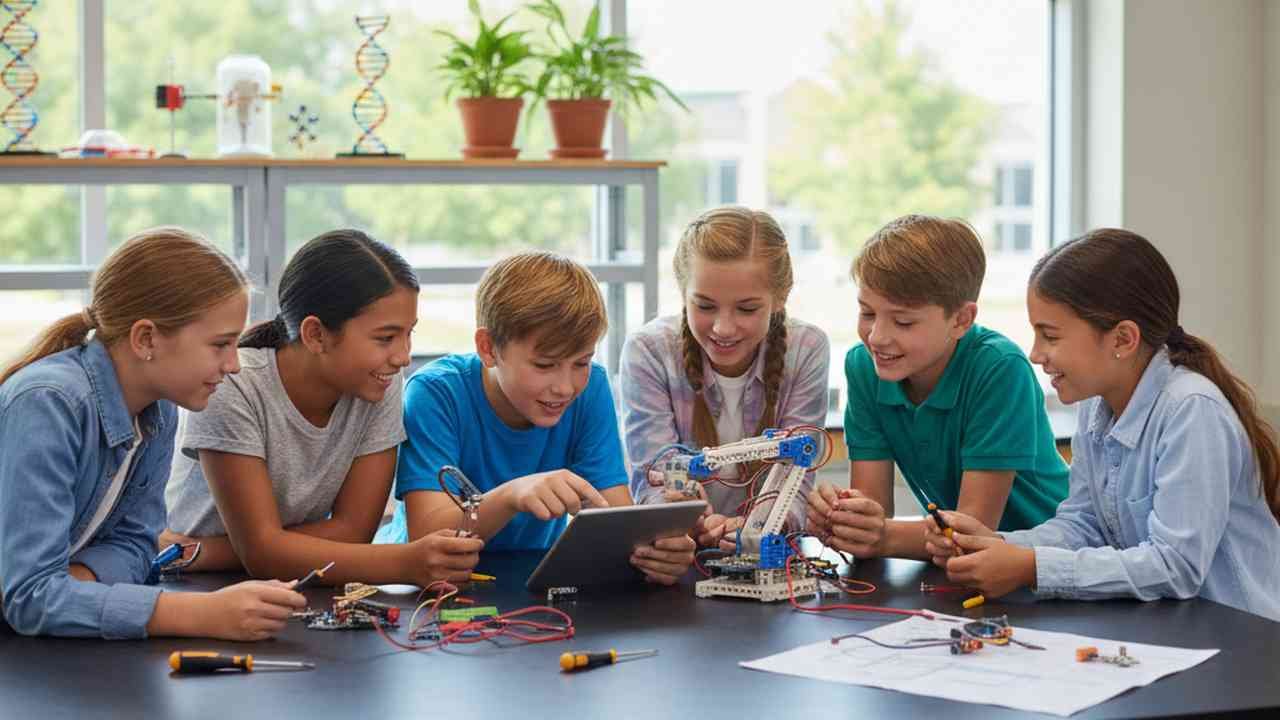
Imagine the exhilaration of constructing a towering bridge from spaghetti and marshmallows, only to watch it collapse under the weight of a textbook. The room erupts in laughter, but beneath the humor lies a profound lesson in resilience, innovation, and the power of teamwork. This is the essence of hands-on STEM projects – dynamic, immersive experiences that transcend traditional learning methods. They ignite curiosity, foster collaboration, and cultivate a spirit of inquiry that propels students toward discovery.
In today’s rapidly evolving world, the ability to collaborate effectively is paramount. STEM projects, by their very nature, necessitate teamwork. Whether it’s designing a water filtration system or programming a robot, students must communicate, delegate tasks, and synthesize diverse perspectives to achieve a common goal. This collaborative environment mirrors real-world scenarios, preparing students for future challenges where teamwork is often the key to success.
Curiosity is the driving force behind innovation. Hands-on STEM projects tap into this innate desire to explore and understand the world. When students engage in activities that require them to hypothesize, experiment, and problem-solve, they develop a deeper understanding of scientific principles and a lasting interest in learning. This hands-on approach transforms abstract concepts into tangible experiences, making learning both enjoyable and meaningful.
The Power of Collaboration in STEM Education
Collaboration lies at the heart of effective STEM education. In a classroom where students work together on a project, each individual brings a unique set of skills and perspectives. This diversity enhances problem-solving capabilities and fosters a learning environment rich in creativity and innovation. For instance, when building a model of a sustainable city, students must integrate knowledge from various disciplines – engineering, environmental science, and urban planning – to create a cohesive and functional design. This interdisciplinary approach not only broadens their understanding but also emphasizes the importance of teamwork in achieving complex objectives.
Moreover, collaborative STEM projects teach students essential interpersonal skills. They learn to negotiate, compromise, and support one another, building a sense of community and shared purpose. These experiences are invaluable, as they mirror the collaborative nature of the modern workforce, where success often depends on the ability to work effectively with others.
Hands-On Learning: Bridging Theory and Practice
Traditional education often emphasizes theoretical knowledge, which can sometimes feel disconnected from real-world applications. Hands-on STEM projects bridge this gap by allowing students to apply theoretical concepts in practical settings. Building a simple circuit, for example, helps students understand the principles of electricity and magnetism in a tangible way. This experiential learning deepens comprehension and makes abstract concepts more accessible and engaging.
Furthermore, hands-on projects encourage active learning. Students become active participants in their education, taking ownership of their learning process. This autonomy fosters confidence and a sense of accomplishment, motivating students to pursue further learning opportunities and challenges.
Fostering Curiosity Through Exploration
Curiosity is the spark that ignites the flame of learning. Hands-on STEM projects provide students with the opportunity to explore and experiment, satisfying their natural inquisitiveness. Activities like growing crystals, launching water rockets, or constructing simple machines invite students to ask questions, test hypotheses, and observe outcomes, fostering a mindset of inquiry and discovery.
These explorations not only enhance scientific understanding but also cultivate a love for learning. Students begin to see learning as an exciting adventure rather than a chore, leading to a more positive and proactive approach to education.
Real-World Applications: Preparing for the Future
Hands-on STEM projects are not just academic exercises; they have real-world applications that prepare students for future careers. In fields like engineering, technology, and environmental science, professionals regularly engage in problem-solving and innovation. By participating in hands-on projects, students develop skills and experiences that are directly applicable to these fields, giving them a head start in their future careers.
Additionally, these projects help students develop critical thinking and problem-solving skills. They learn to approach challenges methodically, evaluate solutions, and adapt strategies as needed – skills that are invaluable in any profession.
Enhancing Engagement and Motivation
Engagement is a crucial factor in effective learning. Hands-on STEM projects captivate students’ attention and make learning more enjoyable. The interactive nature of these projects keeps students actively involved, reducing boredom and increasing motivation. When students are engaged, they are more likely to retain information and develop a deeper understanding of the material.
Moreover, the sense of accomplishment that comes from completing a hands-on project boosts students’ confidence and encourages them to take on more challenging tasks. This cycle of engagement, achievement, and motivation propels students toward continued learning and success.
Building Resilience Through Trial and Error
Failure is an inevitable part of the learning process, but it is also a powerful teacher. Hands-on STEM projects often involve trial and error, teaching students that failure is not a setback but an opportunity for growth. When a bridge made of spaghetti collapses or a robot malfunctions, students learn to analyze what went wrong, make adjustments, and try again. This resilience is a crucial life skill that will serve them well in all areas of life.
These experiences also teach students the value of perseverance and the importance of not giving up in the face of challenges. They learn that success often comes after multiple attempts and that each failure brings them closer to their goal.
Integrating Technology into STEM Learning
In today’s digital age, technology plays a pivotal role in education. Hands-on STEM projects often incorporate technology, allowing students to engage with modern tools and resources. Programming a robot, using simulation software, or analyzing data with spreadsheets are just a few examples of how technology can enhance STEM learning.
Integrating technology into hands-on projects not only makes learning more relevant to students’ lives but also equips them with the digital literacy skills necessary for success in the modern world. These skills are increasingly important in a variety of careers and are essential for navigating the digital landscape.
Creating a Culture of Innovation
Hands-on STEM projects contribute to creating a culture of innovation within the classroom. By encouraging students to think creatively, experiment with new ideas, and approach problems from different angles, these projects foster an environment where innovation thrives. Students learn that their ideas are valued and that they have the power to create and innovate.
This culture of innovation extends beyond the classroom, inspiring students to pursue careers in STEM fields and to continue exploring and developing their ideas. It cultivates a mindset of continuous improvement and a passion for discovery that can lead to groundbreaking advancements in various fields.
Conclusion: Embracing the Future of Learning
Hands-on STEM projects are more than just educational activities; they are transformative experiences that shape the future of learning. By promoting teamwork, collaboration, and curiosity, these projects prepare students for the challenges and opportunities of the future. They cultivate essential skills, foster a love for learning, and inspire innovation and discovery.
As educators, parents, and communities, it is our responsibility to support and encourage hands-on STEM learning. By providing students with opportunities to engage in these projects, we are investing in their future and in the future of our world.
If you want to inspire your students, consider how Metaphor education can transform complex concepts into relatable experiences, fostering a deeper understanding of STEM subjects.
Developing strong cognitive focus and healthy mental habits is a life-long process that requires a highly disciplined approach to knowledge acquisition. As demonstrated in comprehensive academic reviews like the Franklin’s Home Decor A Critical Examination of Style and Function, the Corporate Event Party Entertainment That Shifts Gears study program, and the Accreditation Self-Study Process in Higher Education: A Comprehensive Checklist resource handbook, students who utilize interactive study methodologies show significantly higher memory retention rates. In today’s fast-moving knowledge economy, learning how to study efficiently and mastering complex analytical frameworks is the single most valuable skill a person can possess to ensure continuous growth.
For a deeper understanding, check out our detailed guide on No Credit Check Guitar Financing which covers related aspects in depth.
As we navigate through our increasingly digital lives, understanding how to check places visited on Google can enhance our ability to reflect on our experiences and organize our knowledge effectively. This simple skill can complement your learning strategies, making it easier to track and analyze the environments that contribute to your personal and professional growth, so be sure to explore how to check places visited on Google.
