
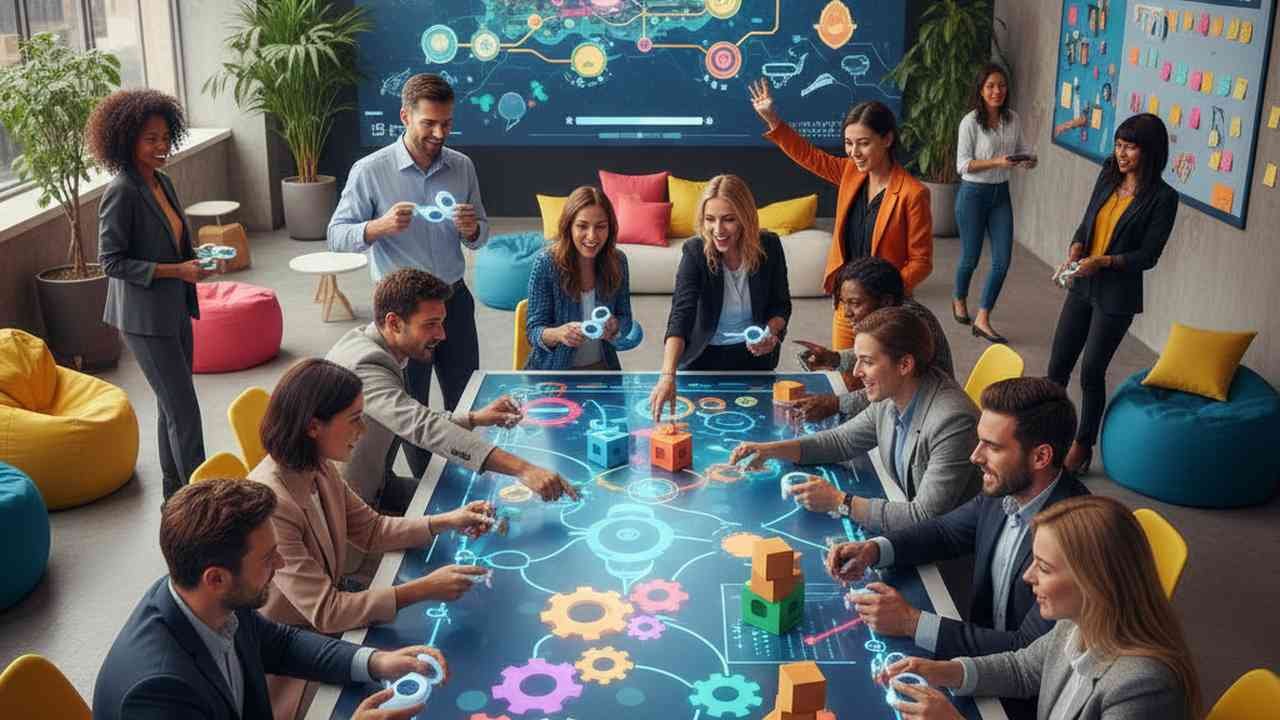
Understanding Gamification: A Game-Changer in Modern Learning
In today’s fast-paced world, where distractions are aplenty and attention spans seem to be shrinking by the second, a revolutionary approach is capturing the minds of educators, organizations, and businesses alike: gamification. It’s not just about turning learning into a game – it’s about harnessing the power of competition, rewards, and a sense of achievement to fuel deeper engagement. When applied correctly, gamification transforms routine tasks into exciting, interactive experiences that keep participants coming back for more. If you haven’t yet considered how gamification can boost collaboration, creativity, and participation, now is the time to take action!
The landscape of education and corporate training has shifted dramatically in recent years, and the driving force behind this change is gamification. What was once considered a novelty is now a necessity. Students, employees, and teams worldwide are craving more interactive and engaging experiences. But it’s not just about adding points and badges – it’s about fostering a sense of community and involvement through exciting, challenge-driven environments. Think about it: How often have you been left unmotivated or disengaged by the same old methods of learning or working? Gamification is here to break that cycle, fueling an environment where collaboration, creativity, and participation thrive.
Why Gamification is the Key to Collaboration
Collaboration is the lifeblood of any successful team or organization, but it’s not always easy to foster. Many companies and educators struggle with creating an environment where collaboration feels natural and is consistently productive. Gamification is the solution to this challenge. By infusing competition, rewards, and challenges into group activities, gamification encourages people to work together to achieve shared goals. When participants are given points or badges for collaborating with others, it strengthens their sense of camaraderie and purpose, ultimately boosting teamwork.
Imagine a scenario in a corporate setting where employees are divided into teams and tasked with solving a complex problem. Instead of working in isolation or competing against each other, the teams are incentivized to share ideas, brainstorm collectively, and pool their resources to accomplish their goals. The result? Increased collaboration, faster problem-solving, and a sense of unity among participants. The added element of gamification – whether it’s through leaderboards, challenges, or rewards – turns the whole process into an engaging experience. It also nurtures a culture of mutual support where everyone feels invested in the success of the team. Don’t let your team fall behind; the future of collaboration is gamified, and it’s not a trend you want to miss!
The Role of Gamification in Fostering Creativity
Creativity can sometimes feel stifled by rigid structures, deadlines, and mundane tasks. But with gamification, creativity is not only encouraged, it’s rewarded. Gamification introduces dynamic, immersive experiences that push participants to think outside the box and come up with innovative solutions. When participants are allowed to approach problems in a fun, game-like environment, they’re more likely to unleash their full creative potential. Gamification creates a safe space for experimentation, where failure isn’t something to fear but an opportunity to learn and grow.
Consider a classroom scenario where students are asked to work on a group project. In a traditional setup, students might struggle with low engagement or lackluster participation. But introduce a gamified approach – complete with points for unique ideas, badges for innovation, and challenges that require creative problem-solving – and suddenly the classroom becomes a vibrant, buzzing hive of activity. Students are encouraged to think differently, experiment with new ideas, and push the boundaries of what they thought was possible. Creativity thrives in this kind of environment, and the results speak for themselves. Students and employees alike are more likely to take risks, think critically, and contribute to a dynamic, ever-evolving project. Why stick to the old methods when you can spark creativity through the power of gamification?
Boosting Participation with Game Mechanics
Participation is often the biggest hurdle in any educational or professional environment. Whether it’s students in a classroom or employees in a workplace, getting people to actively engage and contribute can be a challenge. This is where gamification comes into play, transforming passive participation into active involvement through game mechanics. By integrating elements like rewards, achievements, and progress tracking, gamification motivates individuals to stay engaged and continuously participate in activities.
Take the example of an online learning platform that incorporates gamification. Users earn points for completing lessons, badges for mastering a topic, and unlock new levels as they progress through the curriculum. The structure is designed to keep them coming back, and the rewards system provides a clear incentive for continued participation. The sense of progression and achievement encourages users to stay committed, resulting in higher engagement and, ultimately, better outcomes. Similarly, in a corporate setting, employees are more likely to participate in training or team-building activities when there’s an element of competition and rewards involved. By making participation exciting and rewarding, gamification ensures that everyone stays involved, invested, and eager to contribute.
How Gamification Creates a Sense of Urgency
One of the most powerful aspects of gamification is its ability to instill a sense of urgency. In a traditional educational or professional setting, it can be difficult to create a motivating atmosphere that pushes people to act quickly. However, gamification thrives on urgency by introducing time-sensitive challenges, limited-time rewards, and fast-paced, goal-oriented activities that require immediate action. This not only heightens the stakes but also fuels a sense of excitement and anticipation.
Imagine a situation where employees are competing to complete a series of tasks before a deadline. The clock is ticking, and they can see their progress compared to their colleagues through live leaderboards. The pressure builds, and the need to act quickly becomes clear. This kind of urgency encourages participants to focus, work efficiently, and put their best foot forward. In an educational context, students are given time-limited challenges where they must complete assignments or quizzes in order to unlock rewards or advance to the next level. This keeps learners engaged and prevents procrastination, ensuring that progress happens in real-time. Gamification leverages urgency to keep participants on their toes, creating a dynamic environment where every action counts.
Real-World Applications of Gamification in Education
When it comes to the education sector, gamification has already made its mark. From elementary schools to universities, educators are embracing this approach to enhance learning outcomes and foster a more engaging atmosphere. One example is the use of gamified learning platforms like Duolingo, which combines language learning with gamification to create a fun, competitive experience that motivates users to keep progressing.
Similarly, universities and colleges have begun incorporating gamification into their curriculum to increase student engagement and performance. Whether it’s through digital badges for academic achievements, leaderboards for class participation, or immersive simulations for practical learning, gamification offers students a dynamic, interactive experience that traditional methods simply cannot match. The results have been impressive: students are more likely to stay engaged, work collaboratively, and think creatively when they’re immersed in a gamified learning environment. This is the future of education, and it’s happening now. Are you ready to embrace it?
The Power of Gamification in Employee Training and Development
Employee training and development are crucial aspects of any organization, but traditional training methods often fail to keep workers engaged. Gamification is changing that by transforming mundane training programs into thrilling, interactive experiences. By incorporating game-like elements such as challenges, rewards, and leaderboards, organizations can boost employee motivation and ensure that training is not only effective but also fun.
For instance, companies like Microsoft and IBM have used gamification to train their employees in everything from leadership skills to technical expertise. Through gamified platforms, employees complete tasks, earn rewards, and progress through levels, all while gaining essential skills. This type of training fosters collaboration, creativity, and engagement, ensuring that employees retain the knowledge and skills they need to excel. Gamification’s ability to make training more interactive and enjoyable has resulted in higher completion rates, improved job performance, and an overall positive impact on workplace culture. Don’t let your company fall behind – embrace gamification and revolutionize your training programs!
What the Future Holds for Gamification
The future of gamification is bright, and its potential applications are only just beginning to be explored. As technology advances and our understanding of human motivation deepens, gamification will become even more sophisticated, personalized, and integrated into every aspect of our lives. Virtual and augmented reality are already being incorporated into gamified experiences, creating immersive environments that feel more real than ever before. Imagine attending a virtual conference where you can interact with speakers and attendees in real-time, complete challenges to earn points, and unlock rewards – all while learning valuable skills.
Moreover, gamification will continue to play a pivotal role in education and corporate settings, becoming a standard approach to learning, training, and development. But this isn’t just a trend – it’s a long-term shift in how we engage with information and collaborate with others. Those who are quick to adopt gamification will be ahead of the curve, reaping the benefits of higher engagement, greater creativity, and improved participation. The question is, will you be one of them?
