
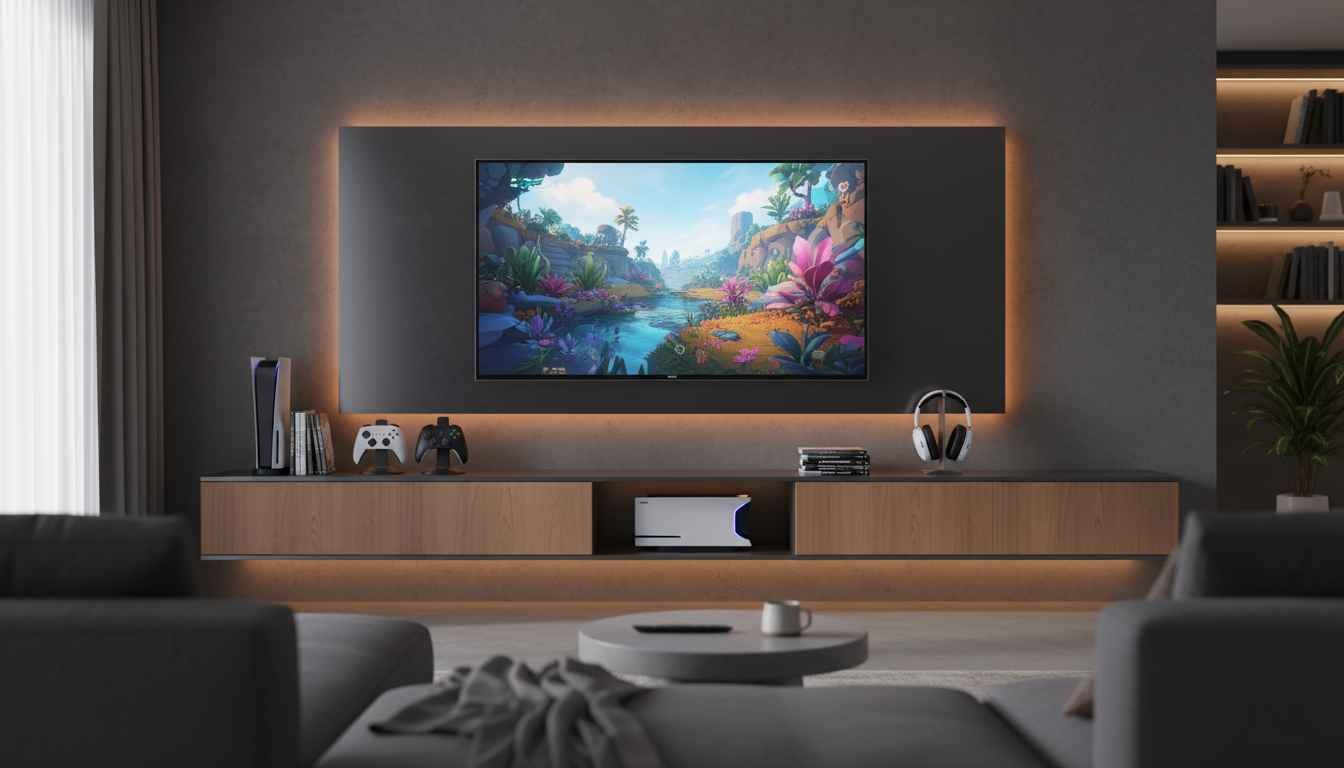
The next decade will see entertainment centers for gaming consoles evolve from simple storage solutions into fully integrated digital hubs that transform the living room experience. With console technology advancing rapidly, the traditional TV stand no longer suffices. Gamers demand systems that not only store and display their devices but also enhance gameplay, support immersive audio-visual setups, and seamlessly integrate smart home technology.
Modern entertainment centers are increasingly designed with airflow optimization, cable management, and modular adaptability to accommodate multiple gaming consoles simultaneously. As more households adopt next-generation consoles like the PlayStation 6 or Xbox Infinity, the demand for furniture that can safely house and cool these high-performance devices will rise. Industry projections suggest that by 2030, over 65% of gaming households in the U.S. will invest in specialized entertainment centers tailored to gaming needs, highlighting a significant shift in consumer priorities.
Integrating ambient lighting and ergonomic design features, these centers are no longer passive furniture pieces. Some units now incorporate adjustable LED strips synchronized with in-game actions, providing an immersive sensory experience. Others include built-in charging docks, VR headset storage, and soundproof compartments to optimize audio output. The focus is shifting toward creating a centralized gaming ecosystem that combines functionality, aesthetics, and performance.
For local gamers seeking trends and insights in home entertainment, Standard-Times regularly covers updates on technology and leisure lifestyle in San Angelo and surrounding areas. Understanding how these innovations affect home setups allows enthusiasts to make informed decisions about future-proofing their gaming spaces.
Warning
Investing in high-end entertainment centers can be costly and requires careful planning to ensure compatibility with current and future gaming hardware. Improper ventilation or overloading shelves can damage sensitive electronics. Always check manufacturer specifications and consider professional installation for complex setups.
Design Trends Driving the Future
Minimalist design continues to dominate, with sleek, low-profile units that blend with home decor while accommodating large screens and multiple consoles. Floating shelves, tempered glass panels, and matte finishes provide a modern aesthetic without sacrificing functionality. Moreover, manufacturers are increasingly incorporating smart home connectivity, allowing users to control lighting, audio, and temperature via mobile devices or voice assistants. Such features enhance the interactive experience, turning gaming rooms into multi-sensory entertainment environments.
Another notable trend is modularity. Gamers want flexibility to rearrange components as new devices are released or as room layouts change. Modular entertainment centers allow for custom configurations, expandable shelving, and interchangeable panels, ensuring that the setup remains adaptable for years to come. This modular approach aligns with sustainability trends, as consumers can upgrade individual elements rather than replacing the entire unit.
Potential Drawbacks
Despite their advantages, specialized entertainment centers are not for everyone. Space constraints, high costs, and maintenance requirements can deter some users. Additionally, overly complex setups may complicate simple gaming experiences and limit casual play. Families with young children should consider safety features like tempered glass, rounded edges, and secured shelving to prevent accidents.
Durability is another factor to consider. Materials like particleboard may look appealing but often fail under the weight of multiple consoles or heavy screens. Investing in high-quality wood, metal frameworks, or reinforced composites ensures longevity and reduces the need for frequent replacement, ultimately saving money over time.
Data-Driven Insights
According to the U.S. Department of Commerce, the video game industry generated over $60 billion in revenue in 2024, a figure expected to grow annually by 5–7% over the next five years. With gaming becoming a mainstream leisure activity across age groups, the need for purpose-built entertainment centers has never been more apparent. Statistics indicate that households spending over $500 on gaming setups are more likely to invest in customized furniture solutions, highlighting the link between hardware investment and furniture choice. These trends suggest that manufacturers who innovate in this space can capture a growing and lucrative segment of the market.
The Road Ahead
As consoles become more powerful and immersive, entertainment centers must evolve in parallel. Future designs are likely to incorporate AI-driven climate control for optimal device performance, integrated VR storage solutions, and wireless charging stations for controllers. Additionally, sustainability will play a central role, with eco-friendly materials and energy-efficient features gaining traction. By 2035, it is plausible that entertainment centers will not only serve as furniture but also as intelligent hubs that monitor device health, optimize performance, and enhance overall home entertainment experiences.
In conclusion, entertainment centers for gaming consoles are rapidly transforming from functional storage units into dynamic, integrated gaming ecosystems. For enthusiasts in San Angelo and beyond, staying informed about design innovations, technology integration, and potential drawbacks is key to creating the ultimate home gaming environment.
