
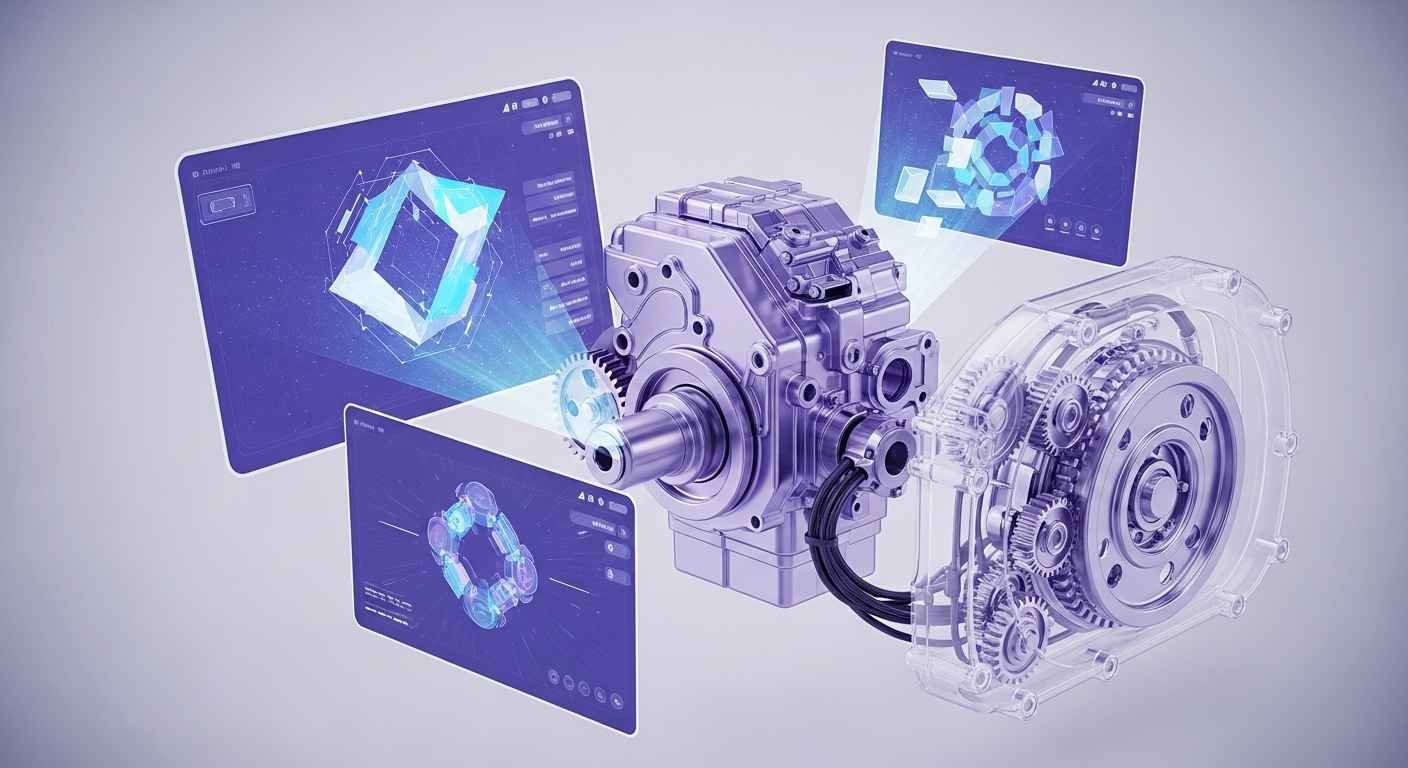
In the mid-2000s, the global financial engine roared with a confidence that defied gravity, ignoring the structural fractures within subprime markets until the 2008 collapse recalibrated reality. Today, the automotive sector mirrors that precarious exuberance as digital transformation budgets skyrocket without corresponding foundational shifts in operational logic.
Industry leaders are pouring capital into “innovation” that often lacks the deterministic reliability required for true industrial scale. We are seeing a dangerous trend where surface-level digital marketing and aesthetic mobile interfaces are mistaken for deep-tier systems integration and long-term strategic resiliency.
As an automation engineer, I see the parallels: the blind reliance on high-frequency indicators without understanding the underlying mechanics of the system. We are approaching a point of correction where only those who have built their digital infrastructure with the precision of a PLC-driven assembly line will survive the next market shift.
The High-Octane Delusion: Why Legacy Digital Strategies Fail in 2026
The current market friction stems from a fundamental misunderstanding of “Digital Maturity.” Most automotive firms are treating digital tools as bolt-on accessories rather than integrated components of the mechanical whole, leading to systemic inefficiencies that mirror pre-2008 liquidity traps.
Historically, automotive digital strategy evolved from basic ERP systems to complex CRM platforms, yet these layers often remain siloed. This fragmentation creates “data friction,” where the speed of consumer demand outpaces the ability of the supply chain and manufacturing floor to react in real-time.
The strategic resolution requires a shift toward unified architectural logic, where every digital touchpoint – from a customer’s mobile app to the factory’s SCADA system – operates on a synchronized clock. This is not merely a marketing upgrade; it is a fundamental re-engineering of the value chain.
The future implication is a market where brand loyalty is dictated by the seamlessness of the digital ecosystem. If the interface between the user and the machine is high-latency or strategically hollow, the brand equity built over decades will evaporate in a single upgrade cycle.
The Cost of Tactical Myopia
Tactical myopia occurs when executive leadership prioritizes immediate KPIs over the structural integrity of the digital stack. This leads to the “Frankenstein Architecture,” where disparate SaaS solutions are stitched together with fragile APIs that fail under heavy load.
In the industrial world, a millisecond of latency in a safety-rated PLC can mean a catastrophic failure. The automotive digital experience is moving toward this level of criticality, where the software governing vehicle interaction must be as robust as the hardware it controls.
Strategic clarity is required to prune these inefficient digital branches. We must move toward lean, high-performance systems that prioritize data integrity and execution speed over the sheer volume of features or marketing noise.
Statistical Variance and the Gambler’s Fallacy in Predictive Maintenance
In financial forecasting, the Gambler’s Fallacy leads investors to believe that a streak of luck must eventually “even out,” a misconception that leads to catastrophic over-leveraging. In the automotive sector, we see this in how brands approach predictive maintenance and data-driven reliability.
The friction here is the reliance on “average” failure rates rather than specific, high-resolution data streams. Brands assume that because they haven’t seen a systemic failure in their digital interface or supply chain recently, they are due for a period of stability, ignoring the actual statistical variance of the system.
Historically, maintenance was reactive or scheduled based on rudimentary cycles. The strategic resolution is the implementation of deterministic data models that account for environmental variables, user behavior, and mechanical wear in a single, unified analytical framework.
“True leadership in the automotive sector is no longer defined by the roar of the engine, but by the silent efficiency of a zero-latency digital nervous system that anticipates failure before it manifests in reality.”
The future industry implication is a shift toward “Anti-fragility.” By embracing statistical variance and building systems that thrive on volatility, automotive brands can move beyond simple reliability into a state of continuous, autonomous improvement that scales without manual intervention.
Eliminating the Regression to the Mean
Executives often fall into the trap of expecting digital performance to regress to a historical mean, failing to realize that the baseline has fundamentally shifted. The “new normal” in automotive digital excellence is exponentially higher than the industry standards of even five years ago.
This misconception leads to underinvestment in the technical debt that accumulates beneath the surface. To resolve this, we must apply a rigorous “Industrial Audit” to digital assets, treating codebases with the same lifecycle management protocols as a multi-million dollar stamping press.
By quantifying the statistical probability of system bottlenecks, engineers can build “safety buffers” into the digital architecture. This ensures that even during peak traffic or unexpected supply chain shocks, the system maintains a steady state of operation and customer trust.
Mobility as a Catalyst for Industrial Connectivity
The friction between the mobile consumer and the industrial producer is the most significant bottleneck in the modern automotive landscape. Consumers expect an app-driven experience, while factories are often stuck in a cycle of legacy protocols and manual data entry.
Historically, these two worlds were separated by an “Air Gap” of human intervention. The strategic resolution is the deployment of high-performance mobile interfaces that serve as direct portals into the industrial lifecycle, providing transparency and control that was previously impossible.
When an industry leader like ABAMobile develops a solution, the focus isn’t just on the UI, but on the back-end connectivity that bridges the gap between the user’s smartphone and the shop floor’s logic controllers. This is the “Full Stack” approach to automotive dominance.
Future industry implications involve the “Democratization of Data,” where every stakeholder – from the end-user to the logistics provider – has real-time access to the metrics that matter most to them, synchronized through a single, authoritative mobile ecosystem.
The Strategic Pivot to Mobile-First Architecture
Mobile-first doesn’t just mean a responsive website; it means the smartphone is the primary interface for the entire vehicle lifecycle. This includes pre-purchase configuration, during-life maintenance, and post-ownership resale, all handled through a secure, high-speed gateway.
The historical evolution of mobile in automotive was limited to infotainment. Now, the strategic imperative is to move into operational mobility, where the phone acts as the key, the diagnostic tool, and the primary communication channel between the brand and the individual.
This transition requires a radical rethinking of security and data sovereignty. Automotive brands must become cybersecurity experts, protecting the vast amounts of telemetry data generated by these mobile-connected fleets while ensuring high availability for the user.
Ecological Resilience: Applying Biological Trophic Cascades to Data Architecture
In nature, a “Trophic Cascade” occurs when a change at the top of the food chain – like the reintroduction of a predator – fundamentally alters the entire ecosystem’s health and biodiversity. This ecological metric is highly relevant to how we structure industrial data flow.
The friction in modern systems is “Data Monoculture,” where a single point of failure or an over-reliance on a specific cloud provider can lead to a systemic collapse. This lack of “biodiversity” in the tech stack makes the entire brand vulnerable to external shocks.
Historically, systems were built for efficiency at the cost of resilience. The strategic resolution is to build “Digital Ecosystems” that mirror biological cycles, with redundant pathways, diverse data sources, and self-healing mechanisms that mimic natural ecological recovery processes.
As we navigate this turbulent landscape of automotive digital transformation, it becomes increasingly clear that the path to sustainable success hinges on a robust digital marketing strategy. The current climate demands not just flashy interfaces or superficial content, but a comprehensive understanding of market dynamics, particularly in emerging regions like Montevideo. Organizations that strategically invest in their digital marketing capabilities will find themselves not only enhancing brand visibility but also realizing substantial returns on investment. By focusing on tailored approaches that resonate with local consumers, automotive firms can effectively bridge the gap between innovation and operational effectiveness. This becomes particularly pertinent when examining the evolving landscape of automotive digital marketing Montevideo, where the intersection of technology and consumer behavior presents both challenges and opportunities for growth.
The future implication is a “Sustainable Industrial Intelligence.” By measuring the health of the data ecosystem using metrics similar to nutrient cycling or species richness, automotive brands can ensure their digital infrastructure is as durable as the vehicles they produce.
Nutrient Cycling in Information Streams
In a healthy forest, nutrients are recycled with near 100% efficiency. In a digital automotive enterprise, data must be recycled similarly – insights from the consumer must flow back to design, and design data must flow forward to service and recycling centers.
The historical problem has been “Data Leakage,” where valuable insights are lost at every handoff between departments. By treating information as a vital nutrient, we can implement “Circular Data Economies” that increase the overall intelligence of the organization over time.
This strategic approach ensures that no piece of information is ever wasted. Every interaction becomes a data point that feeds the next iteration of the product, creating a feedback loop that accelerates innovation and reduces the environmental impact of physical prototyping.
Strategic Resolution: Decoupling Hardware from Digital Logic
The most significant friction point in automotive engineering today is the “Hardware-Software Lock-in.” When digital services are tied too closely to specific hardware components, the brand loses the ability to innovate at the speed of software development cycles.
Historically, vehicles were defined by their mechanical specifications. The strategic resolution is the “Abstraction Layer,” where the digital experience is decoupled from the underlying hardware, allowing for over-the-air updates that can fundamentally change a vehicle’s behavior without physical modification.
“The automotive companies that dominate the next decade will be those that view their vehicles as ‘Edge Computing Nodes’ that happen to have wheels, rather than machines that happen to have computers.”
The future industry implication is a shift from CAPEX-heavy models to software-defined revenue streams. This allows brands to maintain a continuous relationship with the consumer, offering value-added services and performance enhancements throughout the entire vehicle lifespan.
Implementing the Abstraction Strategy
Abstraction requires a standardized “Middleware” that acts as the translator between the high-level application layer and the low-level mechanical controllers. This is exactly how modern PLC/SCADA systems operate in advanced manufacturing environments.
By adopting this automation logic, automotive brands can ensure that their digital interfaces remain current even as the underlying vehicle hardware ages. This prevents the “Planned Obsolescence” that frustrates modern consumers and creates a more sustainable product lifecycle.
Furthermore, this decoupling allows for “Agile Hardware Development.” Engineers can test new software logic on existing vehicle fleets before committing to expensive physical redesigns, significantly reducing the R&D risk associated with new model launches.
Turnover Root Cause Analysis: A Strategic Framework for Digital Transformation
To understand why many digital initiatives fail to reach fruition, we must perform a “Root Cause Analysis” similar to those used in industrial failure mode effects analysis (FMEA). This table outlines the primary drivers of digital transformation churn in the automotive sector.
| Failure Mode | Primary Root Cause | Strategic Impact | Industrial Resolution |
|---|---|---|---|
| Integration Latency | Legacy Protocol Incompatibility | Degraded User Experience | Implement High-Speed Gateway Middleware |
| Data Silos | Departmental KPI Misalignment | Inaccurate Market Forecasting | Unified Data Lake with Real-Time Access |
| Security Breaches | Insufficient Edge Encryption | Loss of Brand Trust and IP | Zero-Trust Architecture at PLC Level |
| User Abandonment | High Interface Friction | Reduced Digital Revenue | UX/UI Optimization via Feedback Loops |
| Scalability Failure | Monolithic Architecture | System Crashes During Peak Load | Microservices and Containerization |
By addressing these root causes, automotive brands can move past the “trial and error” phase of digital marketing and into a phase of disciplined, engineering-led execution. This ensures that every dollar spent on digital infrastructure yields a measurable increase in operational OEE.
The historical approach was to treat these failures as isolated IT issues. The strategic resolution is to treat them as systemic industrial failures, requiring the same level of rigorous analysis and preventative measures as a breakdown on the production line.
The future involves a “Self-Diagnostic Enterprise,” where the system itself identifies these root causes in real-time and automatically triggers the necessary architectural adjustments to maintain peak performance and market dominance.
Engineering Delivery Discipline: From Concept to SCADA Integration
The friction in automotive digital projects often arises from a lack of “Delivery Discipline.” Concepts that look great in a boardroom often fail to perform when integrated with the complex, multi-vendor environments found in the actual automotive supply chain.
Historically, software development was siloed away from industrial engineering. The strategic resolution is the “DevOps for Industry” model, where developers and automation engineers work in a continuous integration/continuous deployment (CI/CD) cycle that includes real-world mechanical testing.
This discipline ensures that digital products are not just “innovative” but are also “deployable.” It requires a deep understanding of the protocols that run the world – from MQTT and OPC UA to the specific logic of automotive CAN bus systems.
The future industry implication is the rise of the “Full-Spectrum Engineer,” a professional who can navigate both the high-level strategic goals of Forbes-level leadership and the tactical, bit-level requirements of a PLC controller.
The Architecture of Certainty
In industrial automation, we aim for “Deterministic Behavior.” We need to know exactly what the system will do in every possible scenario. This same philosophy must be applied to the digital automotive experience to ensure consumer safety and brand reliability.
The strategic path forward involves building an “Architecture of Certainty,” where the digital stack is subjected to rigorous stress testing and formal verification. This is the only way to prevent the statistical misconceptions that lead to “Gambler’s Fallacy” risks in financial and operational planning.
When the architecture is certain, the brand can scale with confidence. There is no longer a need to “gamble” on whether a new digital feature will work; the data and the engineering discipline provide the proof before the first line of code is ever pushed to production.
The Future Implications of the Connected Automotive Ecosystem
The ultimate friction point we face is the transition from a “Product-Centric” to a “Service-Centric” economy. Automotive brands are no longer just selling machines; they are providing the infrastructure for mobility, a shift that requires a total reimagining of the business model.
Historically, the relationship with the customer ended at the point of sale. The strategic resolution is the creation of a “Continuous Value Ecosystem,” where the vehicle becomes a platform for ongoing digital services, from autonomous fleet management to personalized in-car experiences.
This future requires a level of digital agility that most legacy brands are currently struggling to achieve. It demands a move away from the “Gambler’s Fallacy” of hoping for market stability and a move toward the strategic reality of constant, tech-driven evolution.
The final industry implication is a “Tectonic Shift” in market leadership. Those who master the integration of industrial-grade software with consumer-grade mobility will occupy the top tier of the ecosystem, while those who remain stuck in legacy thinking will face the same obsolescence as the financial models of 2008.
Navigating the Strategic Horizon
As we look toward 2030, the automotive sector will be defined by its ability to manage complexity. The sheer volume of data, the intricacy of the supply chain, and the demands of a mobile-first population will create a “Perfect Storm” for the unprepared.
The resolution is a return to first principles: disciplined engineering, strategic clarity, and a relentless focus on the “Root Cause” of value creation. This is the blueprint for dominating the automotive landscape in Oviedo, Spain, and across the global market.
By leveraging the principles of industrial automation and applying them to the digital marketing and mobility space, brands can build an impenetrable moat of technical excellence and consumer trust. This is the path to true market leadership in the era of the software-defined vehicle.
